 Step-by-Step Guide
How to Unstick a Lock
A stuck lock is equal parts frustrating and embarrassing. Whether it's a frozen cylinder or gummed-up pins, the right lubricant in the right place gets you back inside fast.
Don't force the key
A broken key inside a lock is a much bigger problem. If the key won't turn, stop and lubricate first.
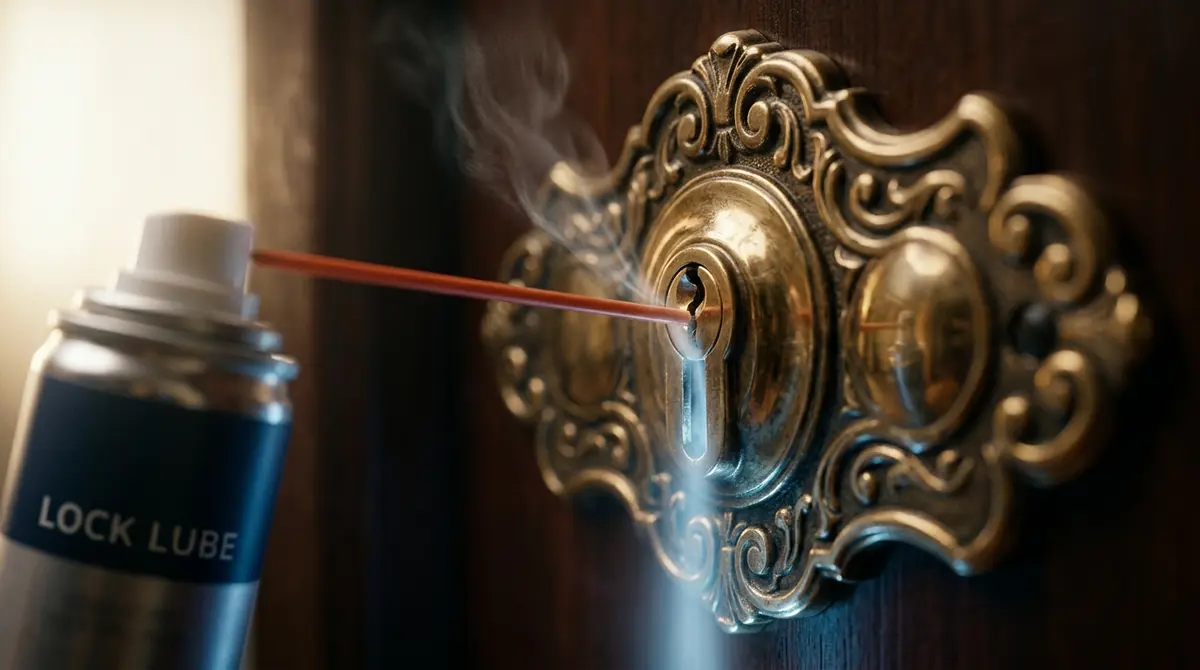
Spray dry lubricant into the keyway
Insert the nozzle directly into the keyhole and give 2-3 short bursts of dry lubricant. PTFE or graphite-based, never oil-based.
Insert and work the key
Slide the key in and out several times without turning. This distributes the lubricant across the pins and springs.
Gently try turning
Apply light turning pressure while jiggling the key slightly. The combination of lubricant and gentle movement frees most stuck locks.
For frozen locks
In winter, use a lock de-icer or hold a lighter to the key for 10 seconds (careful, it gets hot). Insert the warm key to melt interior ice.
Recommended Products


Advice
Never use WD-40 or oil-based lubricants in locks: they attract dust and gum up the pins over time.
Graphite powder is the traditional choice, but PTFE dry lubes are cleaner and last longer.
Preventive maintenance: squirt dry lube into every lock once a year, including padlocks and car doors.
If the lock still won't turn after lubrication, the problem may be a bent key or worn-out pins, and it's time for a locksmith.