How to Loosen a Rusted Brake Line Fitting
The flare nut has fused to the line. They are, unfortunately, in love.
On an old brake line, the flare nut often rusts to the tube itself. Turn the nut and the whole line twists with it. Penetrant and a flare-nut wrench give you the best chance. Be ready to replace the line section if it twists.
Step by Step
- 1
Clean the nut and the tube
Brush the rust scale off the flare nut and the first inch of tubing.
- 2
Soak where the tube enters the nut
That gap is where the nut rusted to the tube. Penetrant needs to reach it, not just the outside threads.
- 3
Use a flare-nut (line) wrench
It grips five or six flats. An open-end wrench will round a rusty flare nut on the first pull.
- 4
Watch the tube as you turn
If the tube starts to twist, stop. Soak it more and try again later. If it still twists, plan to replace that line.
- 5
Bleed and test
Any opened brake line means bleeding the system. Check for leaks under pressure and get a firm pedal before driving.
No open flame around brake lines and fluid. Brake fluid can burn, and the line and nearby rubber hose will not survive it.
- A twisted brake line is a failed brake line. Replace it; do not drive on it.
- If you are not confident flaring and bleeding brake lines, this is a job for a shop.
Which Penetrant, and Why
Amazon links are affiliate links. Disclosure.
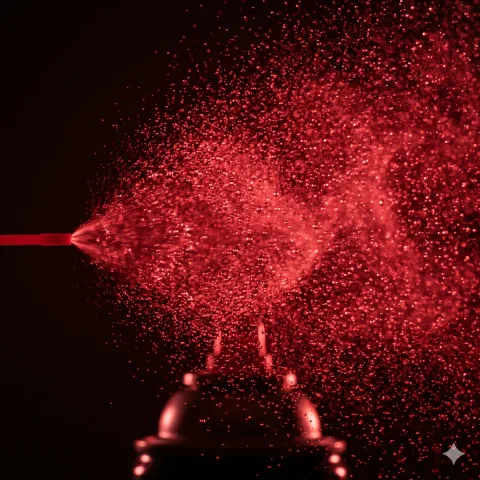 First pick
PB B'laster
The mechanic’s default for heavy automotive rust, and it stays where you put it.
Read our review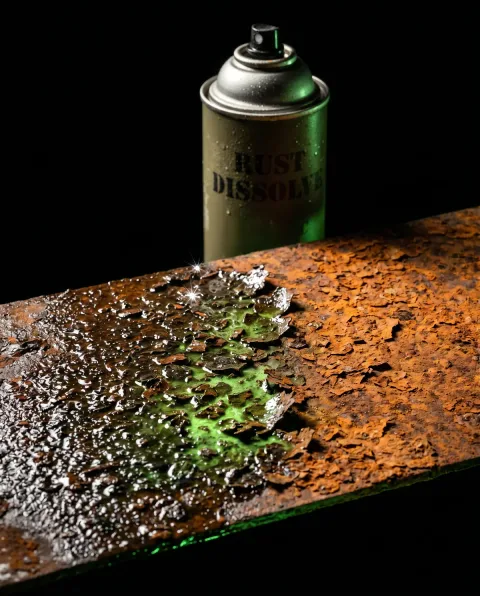
Free All Rust Eater
Its rust-dissolving formula is built for heavily scaled fittings like these.
Read our review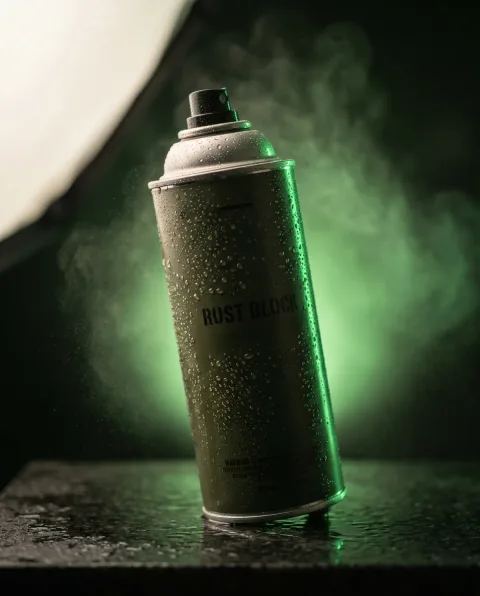
Fluid Film
Not a penetrant for breaking it loose. Use it afterward on brake lines so this doesn’t happen again.
Read our reviewCommon Mistakes
Using an open-end wrench.
Continuing to crank after the tube starts to twist.