How to Loosen a Stuck Brake Bleeder Screw
A tiny hollow screw that holds the whole relationship together. Go gently.
Bleeder screws are hollow, thin-walled and made to seal on a cone seat. That makes them easy to snap. The trick is to soak longer than feels necessary and use a wrench that grips all six flats.
Step by Step
- 1
Clean around the screw
Brush the dirt from the base of the bleeder so penetrant can reach the threads and not just the crud on top.
- 2
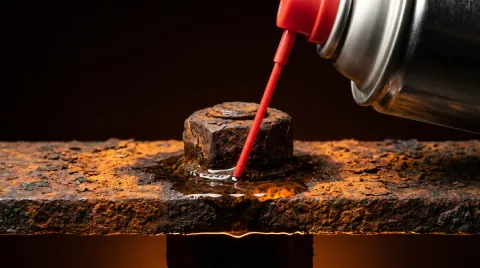
Soak it and leave it
Hit the base of the bleeder with penetrant and walk away. Reapply a couple of times. Overnight is ideal.
- 3
Use a 6-point box wrench or a flare-nut wrench
An open-end wrench will round the flats. A 6-point box-end or a 6-point socket is the right tool.
- 4
Tap, then tighten a hair first
Tap the wrench lightly with a hammer. A tiny tightening nudge can crack the rust bond before you try to loosen.
- 5
Loosen in small moves
If it gives, open it an eighth of a turn, close it, open it again. Work it out instead of forcing it.
Heat on the caliper damages the piston seal. If the bleeder will not move with penetrant and patience, a replacement caliper is usually cheaper than the fix.
- If it starts to twist rather than turn, stop. A snapped bleeder means a new caliper or an extractor job.
- Brake fluid strips paint. Keep rags under the caliper once you open it.
- Bleed the system fully after the work and confirm a firm pedal before driving.
Which Penetrant, and Why
Amazon links are affiliate links. Disclosure.
 First pick
Kroil
Made to creep into very tight clearances, which is the whole problem with a bleeder thread.
Read our review
Common Mistakes
Grabbing it with locking pliers before trying a box wrench.
Expecting a five-minute soak to beat years of corrosion.